How Long Should I Wait to Move Back In After Mold Remediation?
How Long Should I Wait to Move Back In After Mold Remediation?
By the Cowboy K9 team · 4 min read
The mold work is done, the plastic sheeting is coming down, and you want your house back. Here's the short answer: most remediation companies recommend staying out for at least 24 to 48 hours after the final day of work — and longer, often 72 hours or more, for bigger jobs or when someone in the home is very young, elderly, or has asthma or allergies. But the calendar isn't really the point. The real green light to move back in after mold remediation isn't a number of hours; it's confirmation that the area is dry, the air has cleared, and the mold is actually gone. Here's how to know you're there.
How long after mold remediation is it safe to move back in?
For a typical job, plan on 24 to 48 hours after the crew finishes before you settle back in. That window gives two things time to happen: any spores stirred up during the work settle out and get captured by the air scrubbers, and the cleaning and antimicrobial products used during the job finish off-gassing so the air smells neutral again. Larger remediations — or ones where negative-air machines and scrubbers are still running — can call for 48 to 72 hours or more. If you have an infant, an older adult, or someone with asthma or a mold allergy in the household, give it extra time and check with your doctor or pediatrician before that person moves back in. None of these are hard rules; think of them as sensible minimums while the house resets.
How do I know the air is actually clear — not just that time has passed?
You know it's clear when an independent check confirms it, not when the clock runs out. Time alone doesn't prove anything — a house can sit empty for a week and still have an active moisture problem behind a wall. Before you move back in, you want three things confirmed: the moisture source that caused the mold has been fixed, the affected materials are dry (a moisture-meter reading, not a guess), and there's no remaining mold growth in the work area or right next to it. Reputable remediators arrange a clearance step for exactly this reason — and the most trustworthy version of that step is done by someone who didn't do the removal, so the work isn't grading its own homework.
Before you unpack — Confirm the leak or moisture source is repaired, get a moisture reading showing materials are dry, and have the cleared area verified independently. If the house still smells musty after it's dry, that's a reason to pause — not to push through.
A calendar tells you how long it's been. It doesn't tell you the mold is gone.
Where does a detection dog fit in after remediation?
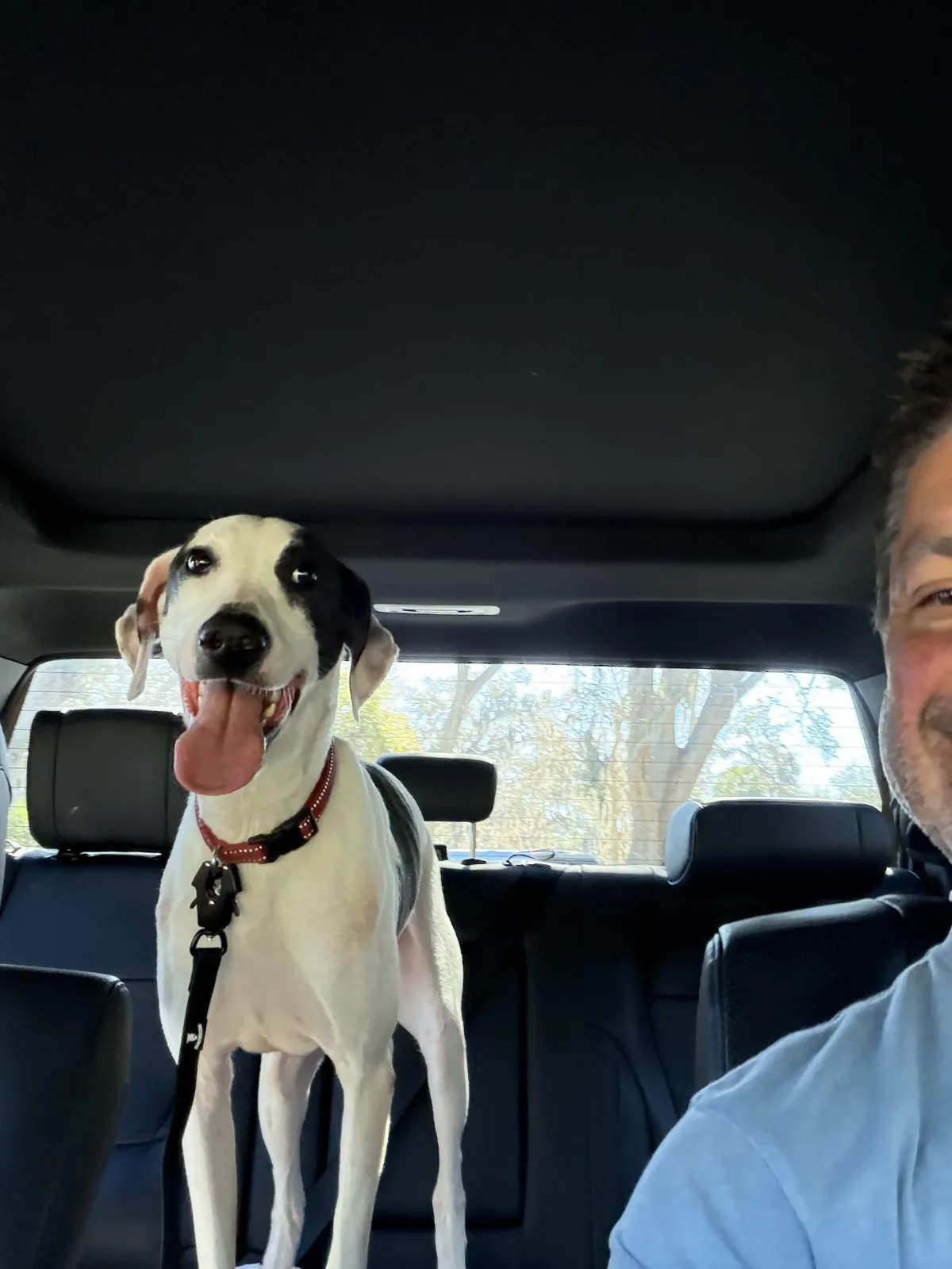
This is one of the most useful moments to bring in a dog. After remediation the question is wonderfully simple: is there still active mold here, or not? Cowboy is trained to follow the gases active mold gives off (MVOCs) at parts-per-trillion sensitivity, with roughly 90 to 97% accuracy in the field. Because he didn't do the removal and has nothing to defend, a canine sweep of your living spaces gives you a clean, independent read on whether the problem is truly resolved before your family moves back in. If Cowboy works the cleared room and the spots that worried you and shows no interest, that's reassuring confirmation in plain terms. If he alerts, you've caught it before you unpacked — far better than discovering it weeks later under fresh paint. For homeowners across Bluffton, Hilton Head Island, Okatie, Sun City, and Beaufort County, a post-remediation sweep is the difference between hoping it worked and knowing it did. Seek. Alert. Inform.
Let Cowboy independently sweep the cleared space before your family moves back in. Seek. Alert. Inform.
Book an Inspectionor call 843-922-SEEK · 843MOLD.com
