How Often Should I Test for Mold After Remediation?
How Often Should I Test for Mold After Remediation?
By the Cowboy K9 team · 5 min read
How often should you test for mold after remediation? For most homes, the answer is: once right after the work — a clearance check to confirm it’s actually gone — and then not on a schedule, but whenever something changes. Mold isn’t like a smoke detector you test every month. It only comes back if moisture comes back. So the honest guidance for a Bluffton, Hilton Head, or Beaufort County homeowner isn’t “test every year no matter what” — it’s “test at the right moments.” Here’s when those moments are.
First: the one test you shouldn’t skip
Right after remediation, before you close the wall back up and move furniture in, is the single most valuable time to check. That’s the clearance step — independent confirmation that the mold is gone and the moisture problem was actually fixed, not just painted over. If the company that did the work is also the one grading its own homework, an independent check is worth having. After that verified starting point, you have a clean baseline. Everything else is about watching for the conditions that would undo it — not re-testing for its own sake.
After that, test when something changes - not on a calendar
Once you’ve got a clean clearance, there’s no need to re-test a healthy, dry home every year just because time has passed. Mold needs moisture to return, so the smart triggers are moisture events, not dates. Check again if any of these happen:
A new leak, a plumbing failure, or a roof problem in or near the area that was remediated. A musty smell that returns to that room. Visible staining or growth coming back. Allergy-type symptoms — congestion, cough, itchy eyes — that flare up again at home after they’d cleared. A hurricane, flood, or days-long power outage that let humidity climb inside. Or you’re selling and a buyer wants reassurance the past problem stayed fixed. Any one of those is a reason to look again; a quiet, dry year is not.
The one standing exception: in our Lowcountry climate, keeping an eye on humidity is worth doing year-round regardless. A cheap hygrometer that keeps indoor humidity in the 30–50% range (and reliably under 60%) does more to prevent a repeat than any test on a schedule. Control the moisture and you rarely need the re-test.
Why a dog is a practical way to re-check
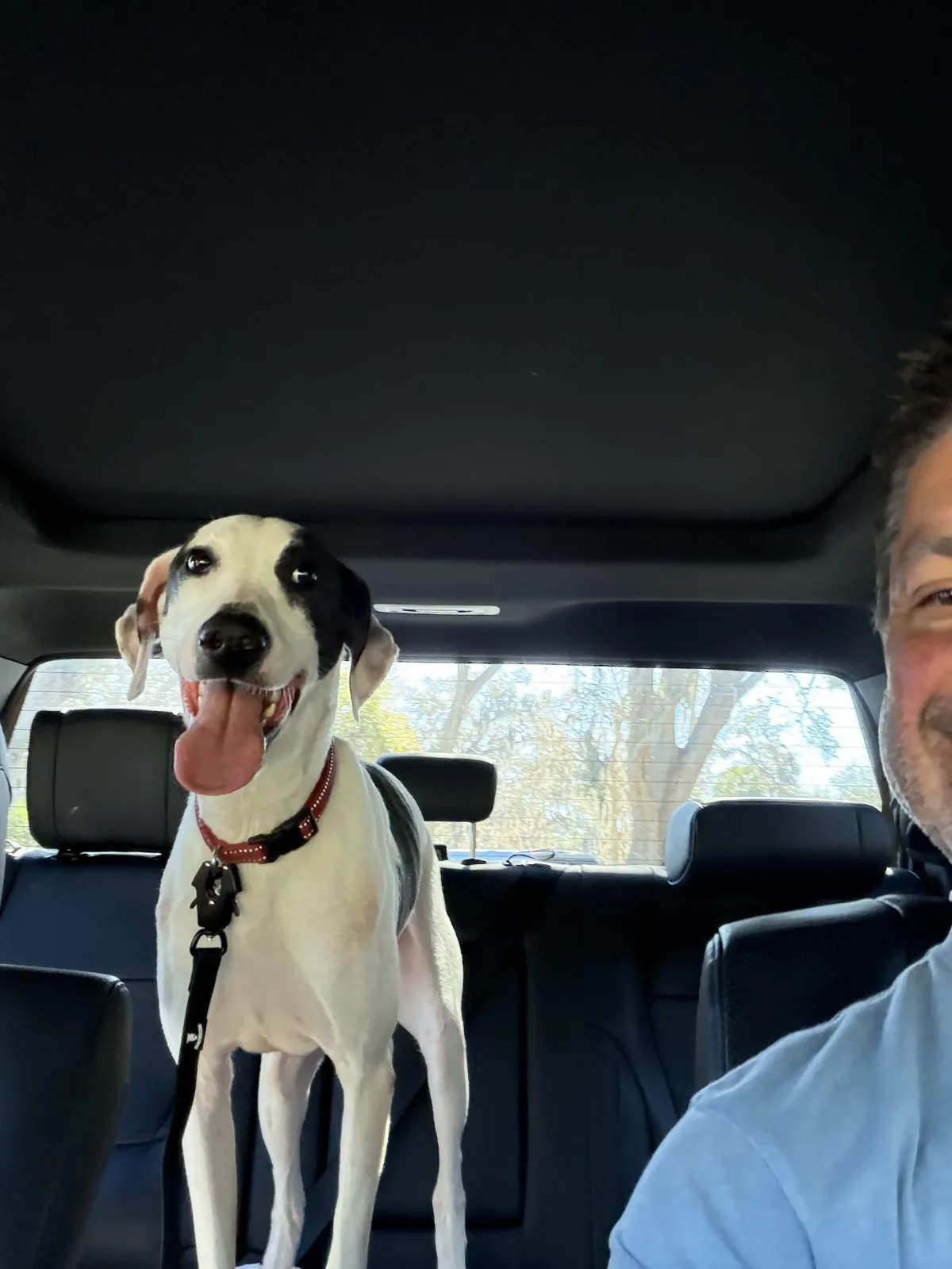
When one of those trigger moments does happen, you want a quick answer without tearing the repaired area apart again. That’s where a canine sweep fits. Cowboy can re-check the living space and alert to active mold at its source — even behind a wall or under a floor — at scent levels down to parts per trillion, without opening anything up on a hunch. It’s a fast, non-destructive way to answer “did it come back?” If he’s quiet, you’ve got your peace of mind back. If he alerts, you know exactly where to focus before a small return becomes a big one.
Mold doesn’t return on a schedule — it returns with moisture. Test at the moments that matter, not the dates.
The short version
Get one solid clearance right after the work. Keep your indoor humidity in check. Then re-test only when something changes — a leak, a returning smell, storm-driven moisture, symptoms coming back, or a sale. That approach protects your home and your budget better than an anxious annual habit. And when a trigger does show up, a dog sweep is a calm, quick way to find out whether the mold really came back or your home is still clear. Seek. Alert. Inform.
Let Cowboy re-check your living spaces so you know whether the mold stayed gone. Protecting health. Preserving property. Promoting peace of mind.
Book an Inspectionor call 843-922-SEEK · 843MOLD.com
