Can a Mold Dog Confirm Remediation Worked Without Opening Up the Walls Again?
Can a Mold Dog Confirm Remediation Worked Without Opening Up the Walls Again?
Yes — a trained mold-detection dog can confirm your remediation actually worked without cutting a single new hole in your walls. That is the whole point of a canine clearance check: the dog reads the air, not the drywall, so you get an answer without another round of demolition.
If you have just paid to have mold removed, the last thing you want is someone telling you they need to open the wall back up “just to be sure.” It is a fair worry. Here is how a dog like Cowboy verifies the work in Bluffton, Hilton Head Island, and across Beaufort County — and where a lab air sample still has a role to play.
Why the “open it back up” question comes up at all
Traditional clearance often leans on visual inspection plus air or surface sampling. Sometimes that means pulling a piece of trim, cutting a small test hole, or getting behind a cabinet to reach a spot the crew already disturbed. After weeks of containment plastic, air scrubbers, and repair work, another invasive check feels like one insult too many.
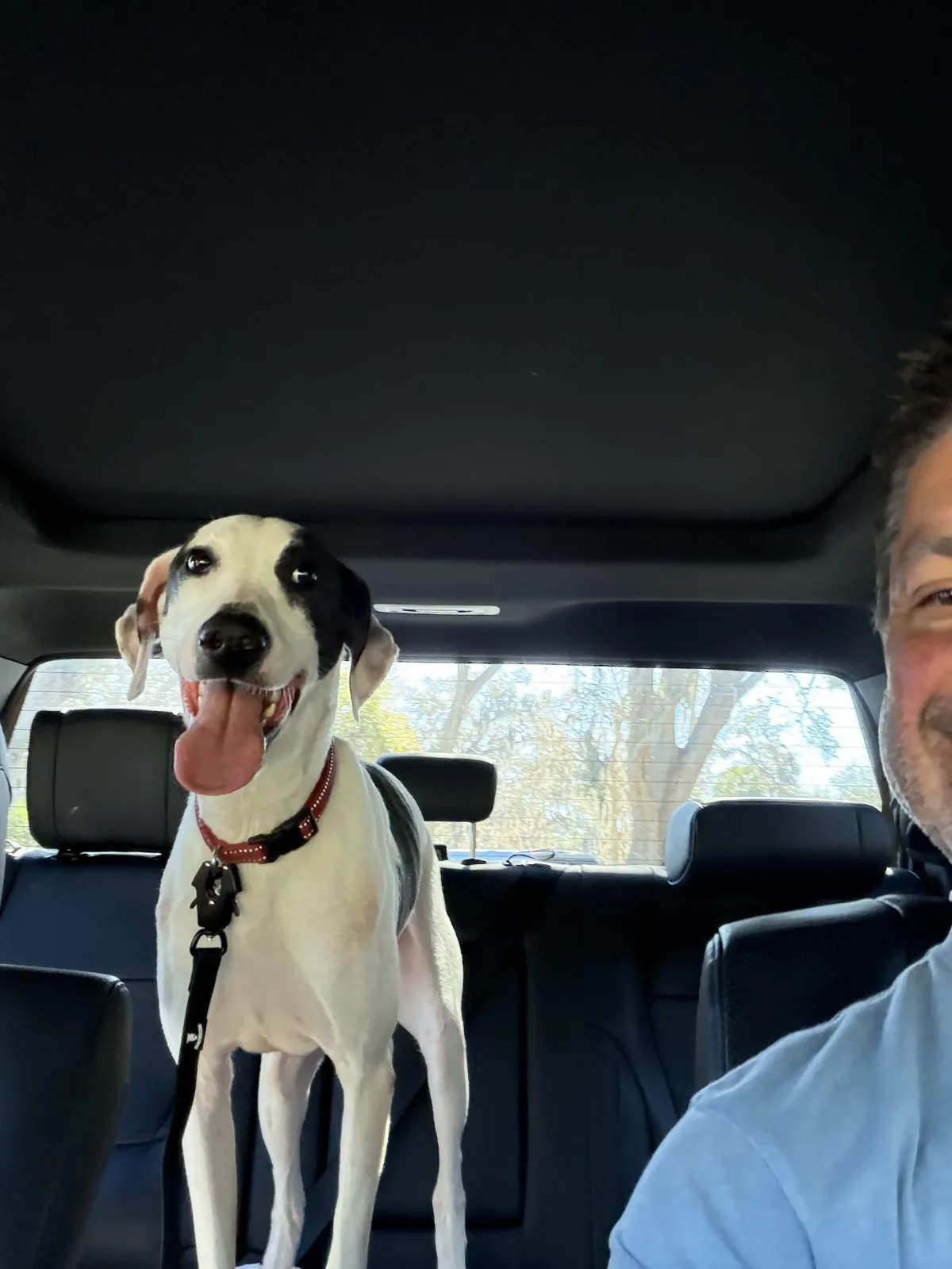
A dog changes the approach. Cowboy is trained to detect the scent of active mold, so he can screen a whole room from the outside of the surfaces. No drilling, no exploratory holes, no fresh mess in a house you just got back in order.
How a dog checks the work without cutting into anything
During a canine clearance, Cowboy is walked slowly through the remediated rooms and the spaces next to them. He works the baseboards, the seams, the closet corners, and the areas around anything that was repaired. If he catches the odor of live mold, he alerts on the exact spot. If he works the room and gives nothing, that silence is meaningful information too.
Because his nose does the searching, the inspection is fast and it leaves your walls, floors, and trim exactly as they are. Only if he alerts would there be any reason to look closer at that one specific location — instead of guessing and opening things at random.
What the dog is actually smelling
Mold gives off microbial volatile organic compounds — MVOCs — as it grows. Those are the molecules behind that classic musty smell. A dog’s nose can pick them up at concentrations measured in parts per trillion, far below what a person notices and often before mold is visible at all. In the field, well-trained detection dogs work in the range of roughly 90–97% accuracy.
The dog is not guessing where the mold might be. He is telling you whether the smell of it is still there at all.
That is why a canine check is such a natural fit for post-remediation peace of mind. You are not asking “does the paperwork say it passed?” You are asking “is the actual smell of active mold gone from this room?” A dog answers that question directly.
When you might still want a lab air sample too
A dog confirms presence or absence of the scent of active growth. A laboratory air sample gives you a spore count on paper. The two are not rivals — they answer slightly different questions. If your remediation was tied to an insurance claim, a real estate transaction, or a written clearance requirement, a documented air sample from an accredited lab may be what the other party wants to see.
For most Lowcountry homeowners who simply want to know the mold is gone before they move the furniture back and stop worrying, a canine sweep is a calm, non-destructive way to get that answer. And if you want both, you can pair the dog’s screen with a lab sample for a complete picture.
How long does a canine clearance take?
For a typical Lowcountry home, walking the remediated rooms and the adjacent spaces usually takes well under an hour, because the dog covers ground quickly and does not need to set up sampling equipment in every room. You get a same-visit read on whether the scent of active mold is still present, which is a big part of why families choose this route when they are eager to put a mold episode behind them.
Cowboy sniffs out hidden mold in living spaces, room by room. Seek. Alert. Inform. Protecting health, preserving property, and promoting peace of mind.
Book an Inspection